
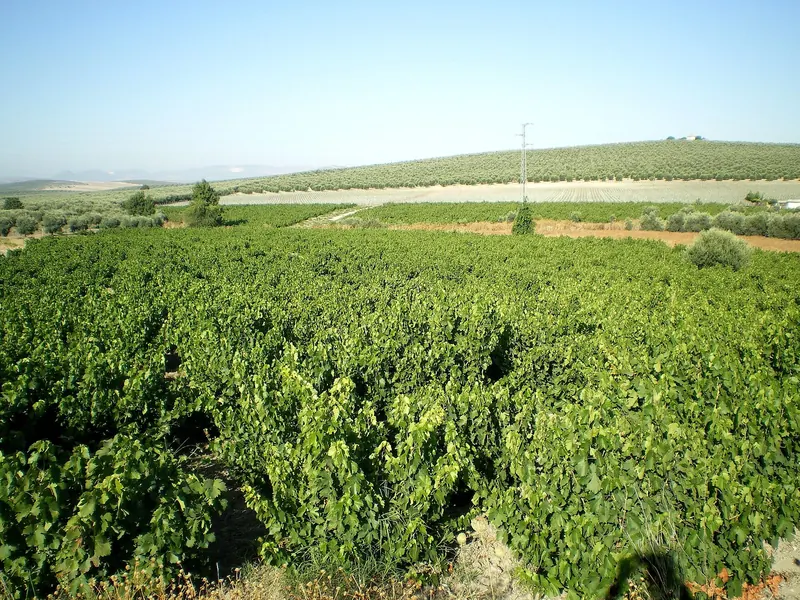
Montilla-Moriles is the designation of origin (D.O.) for the wines of Córdoba. It lies in the south of the province, around the towns of Montilla and Moriles, and mainly produces fortified-style wines — fino, amontillado, oloroso — and the famous sweet Pedro Ximénez.
They are made mostly from the Pedro Ximénez grape, which covers around 95% of the region's vineyard, and they are aged using the traditional criaderas and solera system. If you come to Córdoba, ordering a fino at the bar is as Cordoban as salmorejo.
What is the difference between Montilla-Moriles and sherry?
They are easy to confuse: both use criaderas and soleras and share names such as fino, amontillado and oloroso. But there are important differences:
- The grape. Jerez (sherry) works mainly with Palomino; Montilla-Moriles with Pedro Ximénez, a very sugar-rich grape. The D.O. also allows other varieties such as Airén, Baladí, Moscatel and Torrontés.
- Natural alcohol. Thanks to that sugar and the hot climate of the Cordoban countryside, many Montilla finos reach their strength naturally, without being fortified (adding grape spirit), which is unusual in Jerez.
- Character. Montilla finos tend to be slightly rounder and less saline than those from the Cádiz coast.
What types of Montilla-Moriles wine are there?
| Wine | Ageing | What it is like | Serve at |
|---|---|---|---|
| Fino | Biological, under a veil of flor | Dry, pale, light, notes of almond and yeast | 6–8 °C |
| Amontillado | Biological, then oxidative | Dry, amber, hazelnut and dried fruit | 12–14 °C |
| Oloroso | Oxidative | Dry or almost dry, mahogany, full-bodied, toasty notes | 14–16 °C |
| Pedro Ximénez | Sun-dried grapes | Naturally sweet, almost black, raisins, figs, caramel | 10–14 °C |
What is a fino?
It is Córdoba's everyday wine. It ages under a layer of yeast called the velo de flor (veil of flor), which protects it from oxygen and gives it its pale colour and sharp aromas of almond and bread dough. It is drunk very cold, in a catavino glass, and is the aperitif par excellence.
What is an amontillado?
It starts life as a fino, but when the veil of flor dies away it carries on ageing in contact with oxygen. The result is an amber, dry wine with hazelnut notes and enormous complexity. It is an outstanding wine for the table.
What is an oloroso?
It ages from the start without flor, by oxidation alone. It is darker, fuller-bodied and more aromatic. As well as being drunk, it is the wine most used in Cordoban cooking: artichokes in oloroso, sautéed beef tips in oloroso, meat stews…
What is a Pedro Ximénez?
It is made from grapes left to dry in the sun after the harvest (the asoleo) until they are almost raisins. The very dense must gives a naturally sweet, black wine with aromas of fig, date, coffee and caramel. It is Córdoba's dessert wine.
Which Cordoban dishes go with each wine?
- Fino with salmorejo, Iberian ham, mazamorra, fried dishes and aubergine with honey.
- Amontillado with artichokes, consommés, cured cheeses and mushrooms.
- Oloroso with oxtail stew, pork cheeks and stewed meats.
- Pedro Ximénez with pastel cordobés, blue cheeses or poured over vanilla ice cream.
How do you order wine in a bar in Córdoba?
In Córdoba people simply ask for "un fino" or "un vino de Montilla". It is served very cold in a catavino and usually goes with the first tapa. If you would like something lighter, tinto de verano (red wine with lemonade) and a caña (small draught beer) are the long-standing alternatives. Ask at the bar which wines they have that day: in many places they change with the season.
Where to try dishes cooked with oloroso in Córdoba city centre
On our menu at La Galería, oloroso goes into the cooking, in dishes such as artichokes with leek and ham in oloroso, or sautéed beef tips in oloroso. To drink, the menu includes a glass of house wine (red, white or rosé), tinto de verano and draught beer.