
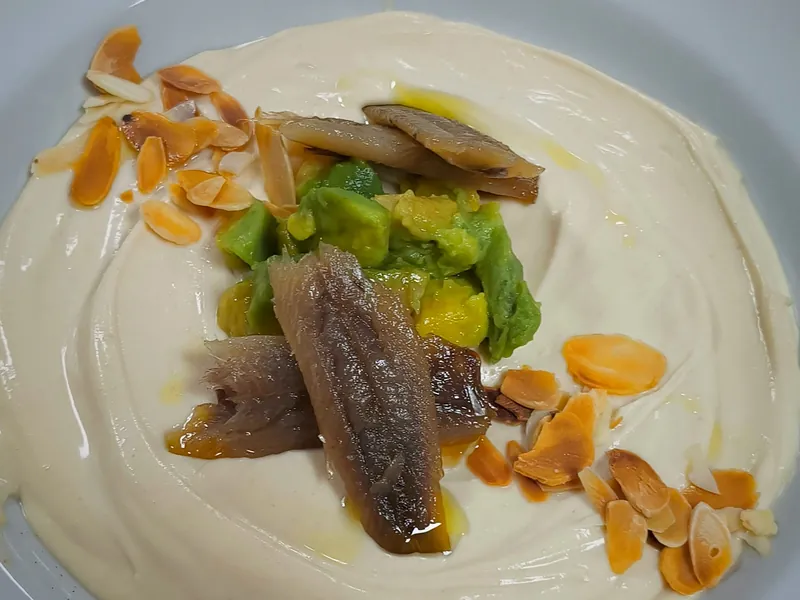
Mazamorra is a thick, cold almond soup from Córdoba (Spain), made with raw almonds, breadcrumb, garlic, extra virgin olive oil, vinegar and salt. It has nothing to do with the Latin American mazamorras, which are corn-based dishes.
It is white, smooth and very filling, and in Córdoba it is considered salmorejo's grandmother: a recipe with roots in al-Andalus that was already eaten in the countryside long before tomatoes arrived from the Americas and turned the city's cold creams red.
Today it is less well known than Cordoban salmorejo, but it is still on the menus of traditional taverns and is enjoying a second youth in kitchens that reinvent it with new toppings. In this guide we explain what it is, where it comes from, how it differs from its relatives and how to make it at home.
What is Cordoban mazamorra?
Mazamorra is a majado, a pounded dish: originally it was made in a mortar, crushing the almonds with the garlic and salt into a paste, then adding the soaked breadcrumb and, little by little, a thin stream of oil to emulsify it. The result is a dense, ivory-white cream, served cold in a bowl or a glass.
Its flavour is delicate: the sweetness of almond, a hint of heat from raw garlic and just enough sharpness from the vinegar. Precisely because it is so mild, it calls for a topping that adds contrast: in Córdoba it is traditionally served with grapes, chopped boiled egg, black olives or a good drizzle of oil.
Where does mazamorra come from?
Cold soups and creams of bread, garlic and oil are an ancient resource of the Andalusian countryside. They were labourers' food: cheap ingredients that stood up to the heat and could be prepared without a fire in the middle of the olive groves. Almonds, very common in the cooking of al-Andalus, turned that humble base into something richer and more nourishing.
When tomatoes arrived from the Americas from the 16th century onwards — and above all when they caught on in Andalusian cooking centuries later — those white creams began to turn red. Salmorejo and gazpacho as we know them grew out of that change. Mazamorra is, in a way, the "before tomato" version that Córdoba never stopped making.
What is the difference between mazamorra, salmorejo and ajoblanco?
All three belong to the same family — bread, garlic and oil, blended cold — but each has its own character:
| Cream | Main ingredient | Texture | Typical topping |
|---|---|---|---|
| Mazamorra (Córdoba) | Raw almonds and bread | Very thick, almost spoonable | Grapes, boiled egg, olives |
| Salmorejo (Córdoba) | Ripe tomato and bread | Thick and creamy | Iberian ham and boiled egg |
| Ajoblanco (Málaga) | Almonds and bread | Thinner, drinkable | Muscat grapes or melon |
The difference between mazamorra and ajoblanco is mainly one of thickness and proportion: mazamorra has less water and usually a little more bread, so it ends up as a cream; Málaga's ajoblanco is a cold soup you can drink from a glass.
How do you make Cordoban mazamorra? Recipe (serves 4)
Ingredients
- 200 g blanched raw almonds
- 150 g day-old breadcrumb (ideally pan de telera or a rustic loaf)
- 1 small garlic clove, germ removed
- 150 ml extra virgin olive oil
- 1 tablespoon wine vinegar (Montilla or sherry vinegar)
- About 300 ml very cold water
- Salt to taste
Method
- Soak the bread. Cover the breadcrumb with a little of the cold water for 10 minutes.
- Blend the almonds with the garlic and salt into the finest paste you can. The finer it is, the silkier the cream.
- Add the drained bread and the vinegar and blend again.
- Emulsify with the oil, pouring it in a thin stream while blending, as if making mayonnaise.
- Adjust the texture with cold water until it is thick but still flows. Check the salt and vinegar.
- Chill for at least two hours in the fridge. Mazamorra is much better after resting.
Tip: for a restaurant-style texture, pass it through a fine sieve before chilling. And go easy on the garlic: raw and cold, it gets stronger over time.
How is mazamorra served, and what goes with it?
The classic presentation has a drizzle of oil, chopped boiled egg and a few halved grapes or black olives. It is a common summer starter, although in Córdoba it is eaten almost all year round, also as a tapa.
To drink, a well-chilled fino from Montilla-Moriles is the natural partner: its salty, almond-like edge matches the almonds in the cream.
How do we make it at La Galería?
Our mazamorra is topped with avocado, toasted almonds and smoked anchovy. Rafa serves it this way because that mix of sweet, salty, toasted and fish works very well with the almond cream. It is our own version; the recipe above is the traditional one.
Where to eat mazamorra in Córdoba city centre
At La Galería we serve mazamorra with avocado, toasted almonds and smoked anchovy, which add a rich, salty contrast to the cream. If you have never tried it, it is a good way into Córdoba's cold dishes beyond salmorejo.