
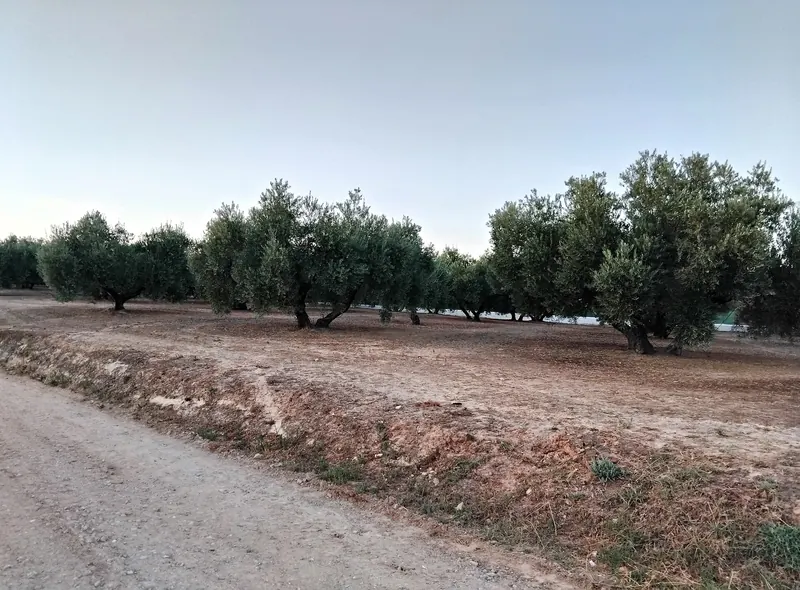
Córdoba olive oil is protected by four designations of origin (PDOs): Baena, Priego de Córdoba, Montoro-Adamuz and Aceite de Lucena, according to the Junta de Andalucía, the regional government. Each covers a different part of the province, with its own olive varieties and its own style of oil.
Córdoba is also the second-largest province in Andalusia in the 2026/27 harvest forecast, behind only Jaén. And autumn brings the first oils of the season, known in Spain as new or early-harvest oil.
How many olive oil designations of origin does Córdoba have?
Córdoba has four protected designations of origin for olive oil: Baena, Priego de Córdoba, Montoro-Adamuz and Aceite de Lucena, as listed by the Junta de Andalucía. The towns and varieties below come from each PDO's official website:
| PDO | Area (towns) | Varieties | Official website |
|---|---|---|---|
| Baena | Albendín, Baena, Cabra, Castro del Río, Doña Mencía, Luque, Nueva Carteya and Zuheros | Picudo, the area's traditional variety | dobaena.com |
| Priego de Córdoba | Almedinilla, Carcabuey, Fuente-Tójar and Priego de Córdoba | Picual, Hojiblanca and Picuda | dopriegodecordoba.es |
| Montoro-Adamuz | According to its rules: Montoro, Adamuz, Espiel, Hornachuelos, Obejo, Villaharta, Villanueva del Rey, Villaviciosa de Córdoba and the part of Córdoba city north of the Guadalquivir | Picual, Nevadillo Negro, Lechín de Sevilla, Picudo and Carrasqueño de la Sierra | montoro-adamuz.org |
| Aceite de Lucena | Aguilar de la Frontera, Benamejí, Encinas Reales, Iznájar, Lucena, Montilla, Monturque, Moriles, Puente Genil and Rute | Mainly Hojiblanca; also Arbequina, Campanil, Chorruo, Lechín, Ocal, Picual and Tempranilla | dolucena.es |
One detail: part of Puente Genil, the Miragenil area, belongs to the Estepa PDO, which is a Seville designation, according to that PDO's single document published by the Junta. The Montoro-Adamuz specification was also amended in 2024, so it is worth checking the current area on its website.
How do Priego de Córdoba, Baena, Montoro-Adamuz and Lucena differ?
Mainly in their area and the olives they use. Priego blends Picual, Hojiblanca and Picuda; Baena's hallmark is Picudo; Montoro-Adamuz adds little-known varieties such as Nevadillo Negro and Carrasqueño de la Sierra; and Lucena relies on Hojiblanca.
Priego de Córdoba
Its producers are in and around the Sierras Subbéticas Natural Park. The PDO works with Picual, Hojiblanca and Picuda, which its website calls "our native variety". According to the PDO, its certified oils come from olives harvested roughly between the second half of October and the first half of January. Profiles range from a light-to-medium fruitiness with ripe notes to a green fruitiness of medium-to-high intensity. Its consolidated specification has been in force since 7 March 2022.
Baena
It groups eight towns in the countryside and the Subbética hills, from Castro del Río to Zuheros. Its website highlights Picudo as the area's traditional variety. If you visit Baena, olive oil even has its own museum there (more on that below).
Montoro-Adamuz
Its list of varieties includes some little-known ones: Picual, Nevadillo Negro, Lechín de Sevilla, Picudo and Carrasqueño de la Sierra. Its specification was amended in 2024 (published in the Andalusian official gazette, BOJA, on 27 September 2024 and in the Official Journal of the EU on 25 February 2025).
Aceite de Lucena
It covers ten towns in the south of the province, including Montilla and Moriles, which also give their name to Montilla-Moriles wine. Hojiblanca is its main variety. The PDO describes a fruitiness between green and ripe, with notes of freshly cut grass, apple, ripe banana and green almond, plus gentle bitterness and pungency.
A practical tip: to notice the differences, taste oils from two different PDOs on the same day and in the same conditions.
How much olive oil will Córdoba produce in the 2026/27 season?
The Junta de Andalucía forecasts around 339,700 tonnes of olive oil for Córdoba in the 2026/27 season, making it the second-largest province in Andalusia after Jaén. This is a forecast (the official "aforo"), published on 29 September 2026, not the final output.
| Area | 2026/27 forecast (tonnes of oil) |
|---|---|
| Andalusia | 1,261,200 |
| Jaén | 575,000 |
| Córdoba | 339,700 |
| Seville | 142,000 |
For Andalusia as a whole, the Junta expects 29.3% more than last season and 44% above the average of the last five seasons. On those figures, Córdoba would account for about 27% of the forecast Andalusian oil (this is our own calculation, not a figure from the Junta). According to the regional ministry, a rainy winter helped the crop while very high temperatures limited its potential.
For context: the olive oil season runs from 1 October to 30 September, and the 2025/26 season closed at 1,298,000 tonnes for the whole of Spain, according to Spain's Ministry of Agriculture, Fisheries and Food.
What is new-harvest or early-harvest olive oil?
Early-harvest oil is made from olives picked while still green at the start of the season; "new oil" (aceite nuevo) refers to the first oils of each season. Neither term, nor "green oil", is an official category: the categories set by EU rules are extra virgin, virgin and lampante.
According to a report in the newspaper Ara (October 2025), the early harvest takes place in October with green olives, while the traditional harvest runs from November to December. A producer quoted in that report says that 100 kilos of green olives yield about 10 kilos of early oil. That is his figure, not a general one, but it helps explain why these oils are made in small quantities.
The same report singles out unfiltered "first press" oil (primer chorro): a different product, cloudy, best used up quickly. When each new oil comes out depends on the mill and the year, so for the 2026/27 season ask the producer directly.
Why is it bitter and peppery? The International Olive Council (IOC) defines bitterness as the taste typical of oil from green olives and pungency as a biting sensation in the throat. In official tasting, both are positive attributes, not defects.
Extra virgin, virgin or lampante: what does each category mean?
The category tells you the oil's quality and appears on the label. According to the European Commission, extra virgin is the top category, virgin allows very slight defects and lampante cannot be sold to consumers.
| Category | What it means | Acidity |
|---|---|---|
| Extra virgin olive oil | Top category: no sensory defects, with fruitiness | Up to 0.8% |
| Virgin olive oil | Very slight sensory defects allowed | Up to 2% |
| Lampante olive oil | Not for retail sale; refined or for industrial use | Over 2% |
Note that acidity here is a laboratory measurement and has nothing to do with the oil tasting sour.
How do you read an olive oil label?
Look at the category first, then the origin and, if you want this season's oil, the harvest year. According to the EU marketing rules (Delegated Regulation (EU) 2022/2104), these are the key points:
- Category. Extra virgin or virgin, the two you will find on most bottles of virgin olive oil.
- Origin. Compulsory for extra virgin and virgin oil.
- Designation of origin. If the oil is protected, the PDO name will appear (for example, Priego de Córdoba or Baena). You can check it on each PDO's official website.
- Harvest year. An optional mention, only for extra virgin and virgin oil, and only if 100% of the oil comes from that harvest. It is the most reliable clue that an oil is from this season.
- Other optional mentions. "First cold pressing" and "cold extraction" are mentions regulated by the rules, according to the European Commission.
Words like "early", "new" or "green" may appear in a brand name, but they are no substitute for the category or the harvest year.
How do you taste and store olive oil?
In official tasting, oil is assessed in dark glasses warmed to about 28 °C, looking for fruitiness, bitterness and pungency. At home, it keeps best away from light and heat, with the bottle closed.
How to taste it
Under the International Olive Council's method, official tasters use dark-coloured glasses so the oil's colour cannot sway their judgement, and keep the glass at about 28 °C. These are the three positive attributes they look for:
- Fruitiness: the aroma of sound, fresh olives, green or ripe.
- Bitterness: the taste typical of oil from green olives.
- Pungency: the biting sensation in the throat.
To try it at home, a simple approach (not the official method) is to pour a little into a small glass, cover it and warm it in your hands, smell it and take a small sip. You will pick up the fruitiness and the peppery kick more easily.
How to store it
The IOC's consumer guide names light as olive oil's main enemy. Its advice:
- Keep it away from light and heat sources.
- Keep the bottle closed, with little air inside.
- Buy amounts you will use within one to three months.
Where can you visit olive mills and see Córdoba's olive groves?
Two options in the south of the province: the Priego de Córdoba PDO's "Turismo y Aceite" programme and the Olive Grove and Oil Museum in Baena.
- Turismo y Aceite (Priego de Córdoba PDO). Guided tastings, mill visits, a harvest day, olive-grove walks, an olive oil breakfast and tasting, and the exhibition "Entre olivares" in Priego's Carnicerías Reales. For dates and bookings, the phone number on its website is +34 957 700 625.
- Museo del Olivar y el Aceite (Baena). Housed in an early 20th-century mill that keeps its original machinery, at Calle Cañada, 7. According to Andalucía.org, confirm opening times with Baena tourist office before you go.
For Montoro-Adamuz and Lucena, each PDO's official website is the best starting point for finding mills in its area.
Where can you try olive oil at breakfast in Córdoba city centre?
In Córdoba city centre, the easiest way to taste olive oil is on toast at breakfast. At La Galería, on Avenida Ronda de los Tejares, 34, half a slice of toast with olive oil costs €1.40 and a whole one €2.60; you can also have it with tomato at the same price.
You choose the bread: breakfast roll, mollete, ciabatta, flaxseed, wholemeal, multigrain or gluten-free. Coffee is €1.50 and fresh orange juice €2.50. We open at 8:30 Monday to Saturday and at 8:00 on Sundays. See the full offer on our breakfast in Córdoba city centre page, and more ideas in our guide to breakfast in Córdoba.
If you come for lunch, olive oil is a key ingredient in Cordoban salmorejo, which we serve with ham and egg.
Sources and references
- Junta de Andalucía: olive oil quality designations (in Spanish)
- Baena PDO, official website (in Spanish)
- Priego de Córdoba PDO, official website (in Spanish)
- Montoro-Adamuz PDO, official website (in Spanish)
- Aceite de Lucena PDO, official website (in Spanish)
- Junta de Andalucía: Estepa PDO single document (in Spanish)
- Junta de Andalucía: 2026/27 olive oil forecast, 29-09-2026 (in Spanish)
- Spanish Ministry of Agriculture, Fisheries and Food: 2025/26 olive oil output, 07-07-2026 (in Spanish)
- European Commission: olive oil, categories and labelling (in Spanish)
- AGRINFO: olive oil marketing standards, Regulation 2022/2104 (in Spanish)
- International Olive Council: sensory analysis method, COI/T.20/Doc. 15
- International Olive Council: tasting glass, COI/T.20/Doc. 5
- International Olive Council: consumer guide (in Spanish)
- Ara: early-harvest olive oil, 09-10-2025 (in Spanish)
- Priego de Córdoba PDO: Turismo y Aceite (in Spanish)
- Andalucía.org: Museo del Olivar y el Aceite, Baena